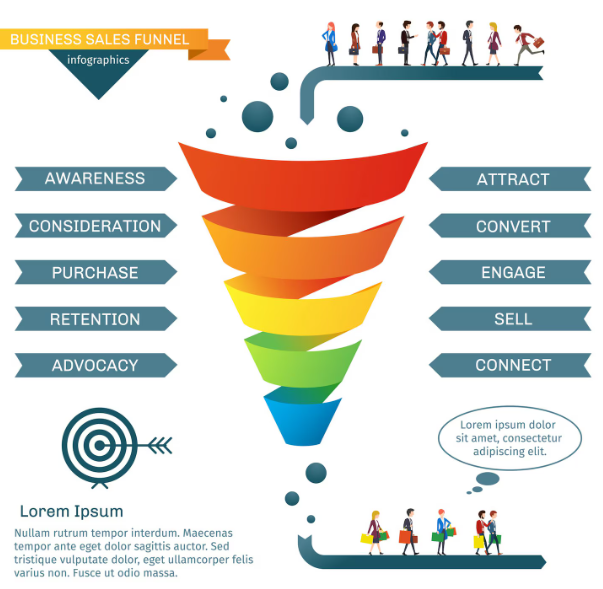
Funnel analysis is one of the clearest ways to understand how users move through a journey you care about,such as signing up, completing onboarding, adding items to a basket, or subscribing to a plan. Instead of guessing where people lose interest, funnel analysis shows exactly how many users reach each step and how many drop off between steps. This helps teams prioritise improvements based on evidence rather than opinions.
Whether you manage an e-commerce site, a SaaS product, or a content platform, funnel analysis turns user behaviour into a simple, decision-friendly story: where users start, where they hesitate, and what finally drives them to complete the goal. Many professionals learning data analytics coaching in Bangalore begin with funnels because the concept is intuitive, practical, and directly tied to business outcomes.
What Funnel Analysis Actually Measures
A funnel is a defined sequence of user actions, arranged in the order they should happen. Each step has a count of users who completed it. The “conversion rate” between steps is the percentage of users who moved from one step to the next.
For example, a typical sign-up funnel might look like:
- Visit the pricing page
- Click “Start free trial”
- Create account
- Verify email
- Complete onboarding
Funnel analysis answers questions such as:
- Which step has the biggest drop-off?
- Are users failing early (poor message clarity) or late (friction in forms or payment)?
- Does the funnel behave differently for mobile versus desktop?
- Did a product change improve or worsen conversions?
The value comes from clarity. You can see losses step-by-step rather than only looking at a final metric like “trial sign-ups”.
How to Design a Funnel That Gives Useful Insights
A funnel only works well when the steps reflect real user intent and measurable behaviour. These best practices keep the analysis reliable:
1) Choose a single, meaningful goal
Avoid mixing goals. A “purchase” funnel and a “newsletter sign-up” funnel should be separate. When funnels try to represent too many outcomes, the results become confusing.
2) Define steps as observable events
Each step should map to a trackable action, such as a button click, page view, form submit, or payment success event. If tracking is inconsistent, the funnel will show false drop-offs.
3) Keep the number of steps reasonable
Three to seven steps is often enough for decision-making. Too many steps create noise and make it harder to identify what matters.
4) Align steps to the user journey, not internal departments
Users do not think in terms of your team structure. A good funnel mirrors how a user experiences the process.
These are common fundamentals taught in data analytics coaching in Bangalore, especially when learners work on real product scenarios and need to translate business questions into measurable funnel events.
Interpreting Funnel Results Like an Analyst
Once your funnel is set up, focus on interpretation, not just observation. A drop-off is a signal, but you still need to diagnose the reason.
Look for the “largest absolute loss” and the “largest percentage loss”
- A step may lose 5,000 users but still have a high conversion rate if the starting count is very large.
- Another step may lose only 200 users but show a very low conversion rate, indicating severe friction.
Segment before you conclude
A funnel may look fine overall, but fail for certain groups. Segment by:
- Device type (mobile/desktop)
- Traffic source (paid/organic/referral)
- New vs returning users
- Geography or language
- App version or browser type
Use time windows thoughtfully
Some funnels are instant (checkout), while others take time (onboarding). If you measure a 7-day onboarding funnel with a 1-hour window, you will incorrectly label users as drop-offs.
Compare funnels over time
Analyse funnels before and after a change (new UI, pricing update, form changes). Consistent tracking and stable definitions are essential for meaningful comparisons.
Common Funnel Pitfalls and How to Avoid Them
Funnel analysis is powerful, but only if implemented carefully.
Mistaking correlation for cause
A drop-off shows where users leave, not why they leave. Pair funnel results with session recordings, user feedback, error logs, or A/B tests to confirm causes.
Poor tracking hygiene
If a “submit” event fails to fire for some browsers, your funnel will show fake abandonment. Always validate event instrumentation and monitor tracking quality after releases.
Over-optimising a single step
Improving one step might shift drop-offs to the next step or attract lower-quality users. It is better to optimise for the overall completion rate and downstream outcomes (activation, retention, revenue).
Ignoring the user’s context
A funnel step may look weak simply because the user is not ready. For example, a pricing page might have low conversions if most visitors are still researching. In that case, the correct action may be improving education and trust signals rather than pushing harder for immediate purchase.
Hands-on practice with these pitfalls is a major reason professionals seek data analytics coaching in Bangalore, where case studies often show how measurement mistakes can lead to the wrong product decisions.
Conclusion
Funnel analysis simplifies complex user behaviour into a step-by-step view of conversions and drop-offs. By defining a clear process, tracking consistent events, and interpreting results with segmentation and time context, you can identify friction points and improve outcomes in a structured way. The goal is not just to see where users leave, but to make smarter decisions about what to fix, test, and measure next.